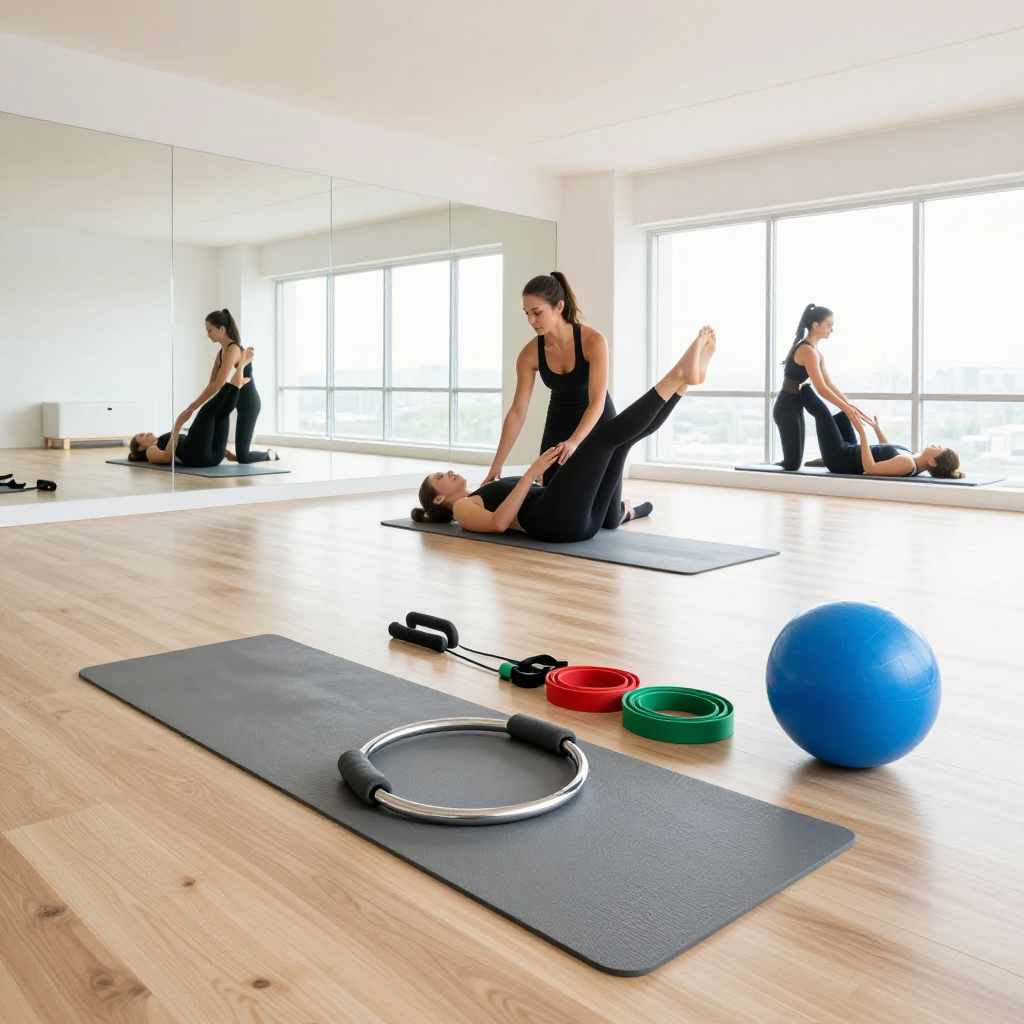
The Beginner’s Dilemma: Why Studio Owners Need a Reliable Exercise Roadmap
Why Generic Beginner Classes Kill Retention Rates
Studio owners often mistake high trial attendance for sustainable growth. Without a reliable exercise roadmap, beginners leave feeling disoriented and physically insecure. A lack of logical progression in beginner Pilates programs directly triggers early dropout rates, preventing the long-term client relationships needed for consistent equipment purchases.

Anchoring Your Intro Class with the "10 Essential Exercises"
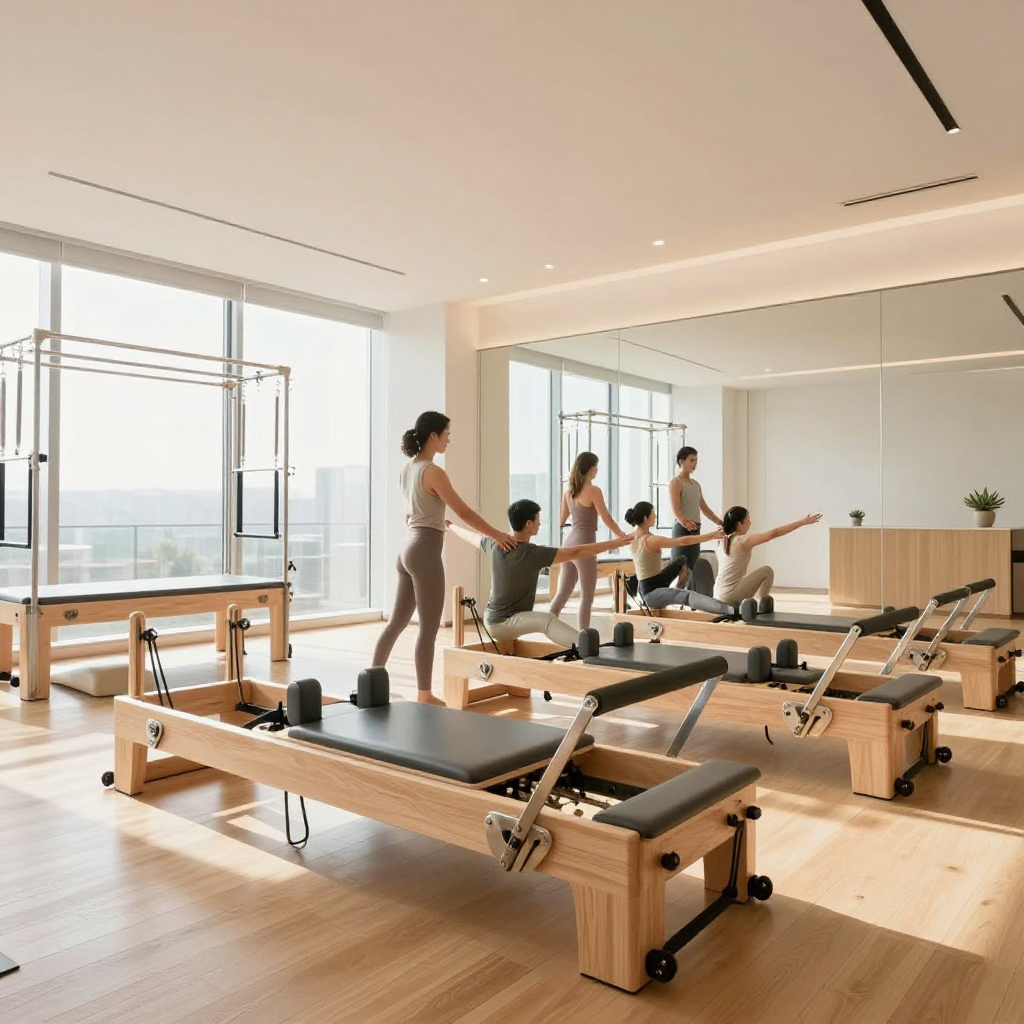
A scattered curriculum overwhelms new learners. Implementing the "10 Essential Exercises" builds a core sequence that transforms complexity into clarity. These foundational movements condition the body systematically, creating rapid skill acquisition. Studio owners report higher compliance when beginners can measure their mastery against a fixed, predictable framework rather than random choreography.
How Equipment Quality Dictates Trust
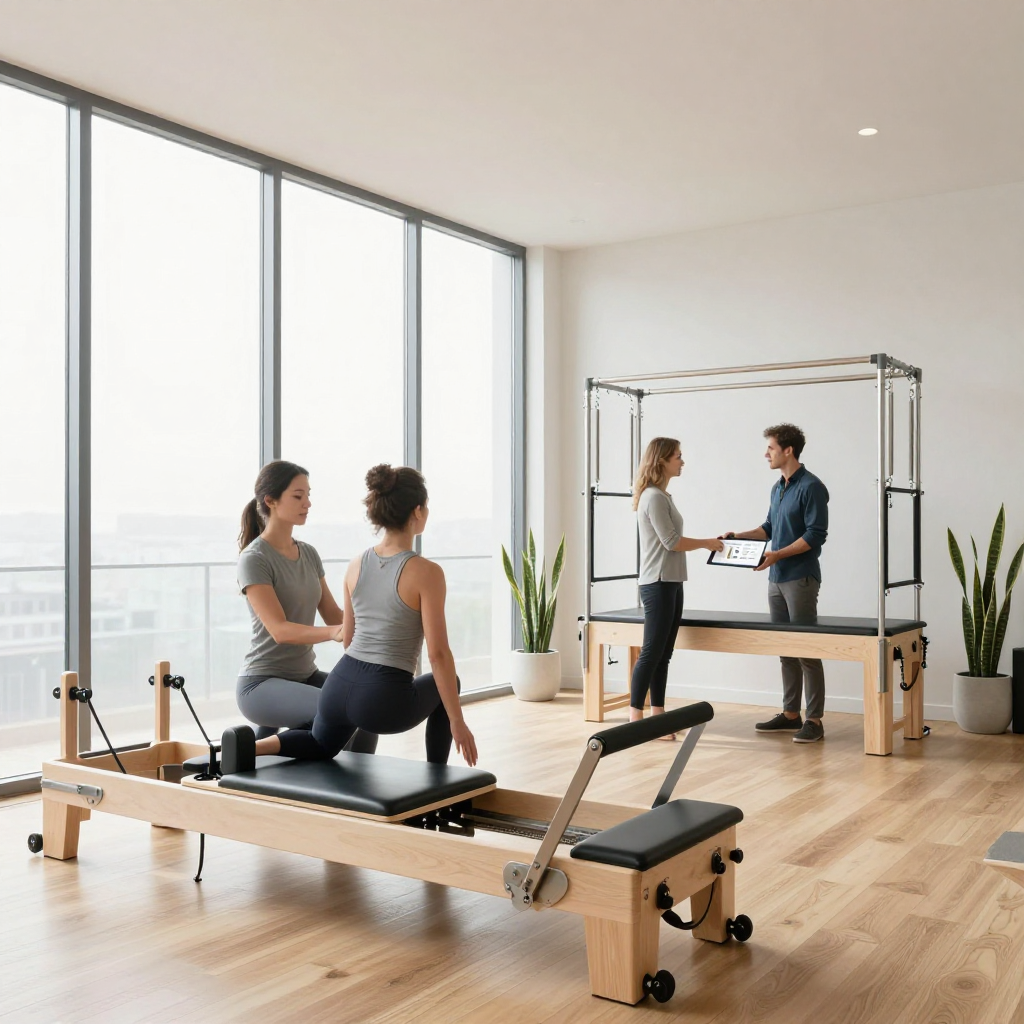
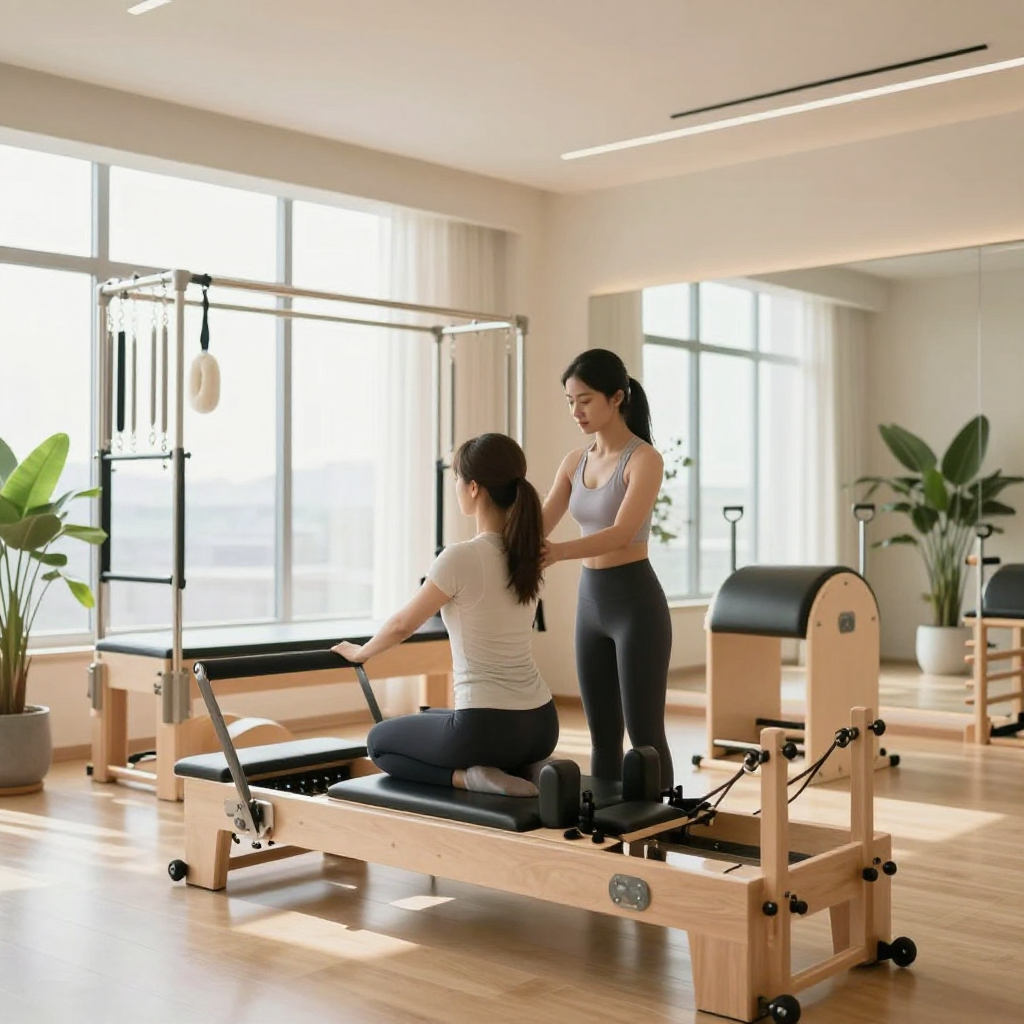
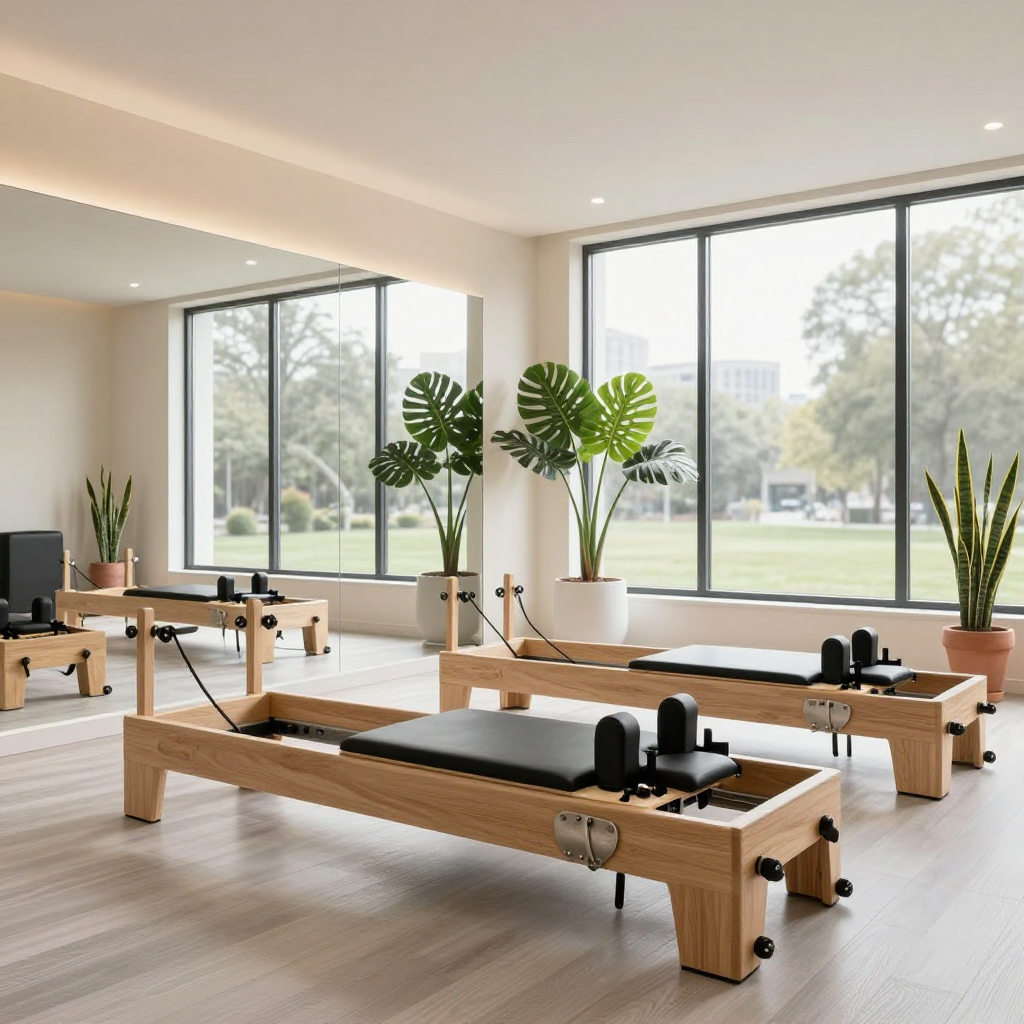
The tactile experience defines a beginner's first impression. Quality props and mats reduce joint stress and prevent slipping during weight-bearing poses. You cannot sustain client retention with flimsy, commercial-grade alternatives that degrade after fifty wash cycles. Commercial reformers and dense, high-grip mats communicate safety. When clients trust the gear, they associate the studio with premium value, naturally inquiring about retail merchandise and supplementary home equipment.
The 10 Essential Pilates Exercises: A Step-by-Step Reference
What Are the 10 Fundamental Pilates Exercises?
This quick-reference chart lists essential beginner Pilates mat exercises, including their primary muscle focus, concise movement cues, and recommended props. Use it to plan classes or offer clear client support without lengthy explanations.
Exercise Primary Muscle Group Key Step-by-Step Cue Recommended Prop
Pelvic Curl Glutes, hamstrings, deep abdominals Lie on your back, knees bent. Roll the pelvis up one vertebra at a time until the body forms a straight line from shoulders to knees, then roll down with control. Yoga block between knees The Hundred Transversus abdominis, respiratory muscles Lie supine, lift legs to tabletop or a 45-degree angle. Pump arms vigorously and breathe in for 5 counts, out for 5 counts. Repeat 10 full cycles. Neck support cushion Roll-Up Spinal flexors, hip flexors Start lying down with arms overhead. Articulate the spine forward to sit tall, then reverse the motion one vertebra at a time. Resistance band around feet Single Leg Stretch Abdominals, hip flexors Lie on your back, hug one knee into the chest while extending the other leg. Switch legs smoothly, maintaining a stable pelvis. None (optional ab support pad) Leg Circles Hip mobilizers, core stabilizers Extend one leg toward the ceiling. Draw small, controlled circles without rocking the pelvis. Repeat both directions. Resistance loop around ankle Swan Prep Spinal extensors, back muscles Lie prone with hands under shoulders. Press into the hands to lift the chest while keeping the pubic bone grounded, then lower back down. Thick mat for comfort All Fours Transversus abdominis, spinal stabilizers Start on hands and knees. Extend one arm and the opposite leg simultaneously without arching the back. Return and alternate sides. Balance pad under knees Rolling Like a Ball Spinal flexors, balance control Sit tall, tuck the chin, and hug the shins. Roll back to the shoulder blades and return to a balanced seated position using abdominal contraction. Non-slip mat Bridge Glutes, hamstrings, core Lie on your back, feet flat. Lift hips toward the ceiling, squeeze glutes, and hold for a moment before lowering. Progress to single-leg bridge if stable. Yoga block under sacrum Swimming Posterior chain, glutes, back extensors Lie prone with arms and legs extended. Alternately lift opposite arm and leg in a fluttering motion, keeping the core engaged to protect the lower back. Small pillow under pelvis These foundational Pilates exercises build core control and spinal mobility. Encourage clients to use props only when they enhance alignment or gradual progression.

Equipment Must-Haves for a Beginner Pilates Program
Which Equipment Supports Each Beginner Pilates Exercise?
For a beginner Pilates program, selecting the right props enhances safety and progression. This table maps 10 foundational mat exercises to their minimum requirements, optional upgrades, and commercial product examples.
Exercise NameMinimum EquipmentOptional UpgradeCommercial Product ExampleThe HundredHigh-density matMagic CircleBalanced Body Magic CircleRoll UpHigh-density matResistance bandTheraBand resistance bandSingle Leg CircleHigh-density matSmall overballURBNFit small overballRolling Like a BallHigh-density mat——Single Leg StretchHigh-density matMagic CircleStamina Magic CircleDouble Leg StretchHigh-density matSmall overballPower Systems overballSpine Stretch ForwardHigh-density matLightweight knee padGaiam lightweight knee padSawHigh-density matResistance bandSPRI resistance bandSwan PrepHigh-density matLightweight knee padManduka lightweight knee padTeaser PrepHigh-density matResistance bandFit Simplify resistance band When sourcing for commercial use, prioritize key categories: high-density Pilates mats, Magic Circles, small overballs, resistance bands, and lightweight knee pads. Importers should examine thickness (≥6mm for mats), durable tear-resistant materials, and non-slip textures. Mats constructed of closed-cell TPE or natural rubber resist moisture; overballs require anti-burst PVC. Magic Circle frames must maintain flexibility without cracking, and resistance bands benefit from layered latex for consistent tension. Evaluating these quality indicators—material, thickness, durability, and non-slip surfaces—ensures equipment longevity and client safety across beginner Pilates programs.
Designing Starter Kits for Studios and Resellers
Designing Starter Kits for Studios and Resellers
Studio owners can increase member retention by packaging essential props into a Beginner Pilates Kit. Present the kit as an upsell during onboarding or include it in a premium membership tier. A curated bundle removes purchase friction for new clients and reinforces the studio's professional image from day one.
Composition of a Beginner Pilates Kit
A functional sample Beginner Pilates Kit combines a 6mm TPE non-slip mat, a 14-inch anti-burst yoga ball, a 12-inch magic ring with foam handles, and a 1.2m resistance band. These specifications balance comfort and longevity, meeting the demands of frequent group classes and at-home practice.
Bulk Order Trends and Customization for Distributors
Distributors can align this kit with current bulk order trends. Overseas manufacturers typically offer a minimum order quantity of 300 units, creating a cost-efficient supply chain. Customization opportunities drive differentiation: choose signature colors, add private label tags, or apply logo printing on mats and carry bags. Such branding transforms a generic set into a reseller’s exclusive product line.
Buyer’s Checklist for Overseas Manufacturers
- Request valid SGS or REACH certifications for all TPE and PVC components.
- Evaluate pre-production samples for seam strength, print clarity, and handle attachment.
- Confirm retail-ready packaging options, including individual polybags or branded boxes.
- Clarify mold fees, artwork setup charges, and lead times for custom color runs.
Global Market Snapshot: Why Pilates Equipment Demand Is Rising
What’s Driving the Pilates Equipment Boom in Key Markets?
Global demand for Pilates equipment is accelerating at a compound annual growth rate above 6%, with North America, Europe, and Australia leading the charge. In the United States alone, the home-fitness equipment market surpassed $10 billion in 2023, and Pilates-specific gear now claims a rapidly expanding share. European boutique studios are scaling up their reformer fleets, while Australian distributors report a 25% year-on-year increase in orders for entry-level packages.
Post-pandemic shifts fuel dual demand streams
The post-pandemic landscape has created two powerful tailwinds. On one side, boutique fitness studios continue to upgrade and diversify their setups, driving B2B purchases of reformers, chairs, and cadillacs. On the other, the home practice boosters segment remains robust, with consumers investing in rings, balls, and compact reformers for consistent at-home sessions. This dual demand gives distributors a rare opportunity to serve both institutional and individual end-users simultaneously.
How curated beginner product lines give distributors an edge
For B2B buyers, a focused starter collection removes guesswork. A well-balanced line of core-stable reformers, lightweight accessories, and space-saving studio bundles helps you stand out in a crowded catalog. By eliminating overly complex commercial gear, you shorten the sales cycle and build repeat business from studios that grow incrementally. This approach also simplifies inventory control and after-sales support, two critical factors for strengthening distributor margins.
See our FAQ below for guidance on selecting the right Pilates equipment mix for your region, or reach out now to secure a competitive pilot order.
Frequently Asked Questions
Frequently Asked Questions
1、What is the minimum equipment needed to run a beginner Pilates class in a new studio?
To launch a beginner mat class, you only need high-density Pilates mats and a few small props. Start with 10–15 mats (6–8mm thickness) and a set of magic circles and resistance bands. If space and budget allow, adding one or two reformers can signal a premium offering, but they are not essential for introductory sessions. Investing in durable, non-slip mats from a trusted Pilates equipment supplier ensures client comfort and reduces early replacement costs.
2、How do I choose the right Pilates mat for durability and client comfort?
Look for a mat that balances cushioning with stability. A 6mm minimum thickness in closed-cell TPE resists sweat and odors while providing firm joint support. Density matters more than thickness alone—higher density prevents premature compression. For import orders, always request tear-strength test reports and evaluate a physical sample for grip and resilience. This due diligence, performed with your Pilates equipment supplier, guarantees long-term performance and keeps your studio’s mats looking professional class after class.
3、Are small props like rings and balls really necessary for beginner exercises, or can I start without them?
Small props such as magic circles and mini balls are not mandatory. All beginner exercises can be taught effectively on a quality Pilates mat alone. However, props enhance proprioception, correct alignment, and add variety that helps new clients stay engaged. If you are outfitting a studio on a tight budget, begin with mats and add rings, bands, and balls gradually. Many Pilates equipment suppliers offer B2B starter kits that bundle these accessories at a competitive price, making it easy to scale later.
4、What should I look for in a reliable Pilates equipment supplier when importing?
Prioritize suppliers with ISO9001 certification and independent safety-testing reports for reformers and accessories. Request a pre-production sample to inspect weld quality, upholstery stitching, and frame stability. Confirm the supplier can meet your MOQ and lead time while offering custom branding and multilingual after-sales support. A transparent warranty policy and verifiable references from other studios or gym chains indicate a partner experienced in international shipment of fitness equipment.
5、Can these 10 exercises be done at home without professional supervision?
The 10 beginner mat exercises are physically doable at home on a good Pilates mat, but professional supervision is highly recommended. Without live feedback, newcomers often adopt incorrect form, risking strain and slower progress. We advise learning the fundamentals in a studio with a certified instructor first. For at-home practice, use a mirror to self-check alignment and follow detailed video guidance. A durable, non-slip mat from a reputable Pilates equipment supplier reduces slip hazards, but nothing replaces a trained eye.
Conclusion: Your Next Step Toward a Profitable Pilates Program
Turning Structured Programming into a Long-Term Revenue Engine
Implementing a structured beginner exercise list does more than organize a curriculum. It directly bridges client success with equipment sales. When new members see a clear progression path, they stay longer, commit deeper, and purchase the accessories or machines that support their home practice.
Why Alignment Builds Trust and Repeat Orders
Studio owners who align classes with a proven beginner framework differentiate their brand in a crowded market. This consistency reassures members and naturally drives inquiries about reformers, mats, and starter bundles. For distributors, that same alignment transforms a standard product catalog into a solution-based offer—reducing decision friction and increasing average order values.
Your 2025 Growth Catalyst: Startup Kits and Catalogs
Whether you operate a boutique fitness space or manage a regional distribution network, the next quarter’s growth depends on removing guesswork for the end user. Our team has packaged the essential program framework into actionable sales tools.
Contact us to request your free 2025 Pilates Equipment Catalog—built around beginner-through-advanced progressions that inspire confidence. Request the wholesale pricing sheet to evaluate volume margins, or schedule a quick call to review private-label starter kit configurations tailored to your market. Reach out at partnerships@yourpilatesbiz.com or submit the inquiry form on this page to lock in your catalog allocation.